Understanding the Intricate World of Jueteng
Jueteng is a numbers game that has deeply embedded itself within the cultural, economic, and political landscapes of the Philippines. Despite being illegal, this activity thrives across the country and is often described as both a vice and a livelihood for many. The intricate web that sustains it makes addressing jueteng a complex issue.
The Mechanics of Jueteng
The basic mechanics of jueteng are deceptively simple. Bets are collected by local coordinators known as cabos, and the winning numbers are chosen through a random process, often involving two sets of numbers drawn from small wooden balls. Typically, the draw consists of a pair of numbers ranging from 1 to 37 or 1 to 38, depending on local preferences.
Participants place their bets on a specific combination of numbers. Unlike other forms of gambling, jueteng typically has a lower barrier to entry, as bets can range from small amounts to higher stakes depending on the bettor's resources. The draw for the winning numbers is usually done twice daily, adding to the game's accessibility and regularity.
The appeal of jueteng lies in its simplicity and the substantial payoff potential, despite the odds being significantly stacked against the bettors. For many Filipinos, jueteng represents not merely a gambling activity but also a slice of cultural life, deeply entwined with everyday experiences.
Historical and Cultural Context
Jueteng's roots in the Philippines extend back to the Spanish colonial period. Over the decades, it has evolved and adapted, surviving political upheavals, regime changes, and stringent crackdowns. It's difficult to overstate jueteng's cultural significance as it has become part of the social fabric in many communities.
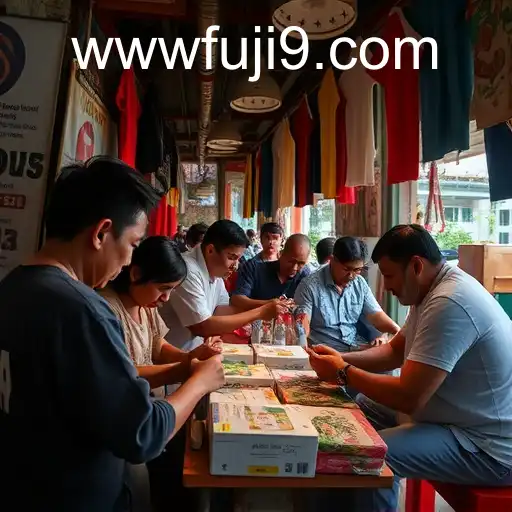
For many, jueteng is more than just an opportunity to win money—it serves as a social activity, a forum for conversation, and even a means of camaraderie. The social acceptance, or rather resignation, of jueteng among Filipinos is palpable, as evidenced by its portrayal in film, literature, and even in everyday discourse.
This cultural entrenchment makes it particularly challenging for authorities to curb its prevalence. Attempts at legalizing similar lottery operations have historically met with limited success due to the widespread trust and local familiarity with jueteng.
The Socioeconomic Impact
Jueteng's impact is distinctly socioeconomic. For the impoverished, it offers a fleeting hope—a gamble that could potentially benefit families struggling to make ends meet. In economically depressed regions, jueteng's role extends beyond entertainment; it becomes an unlikely financial safety net.
The economic flow generated by jueteng is significant. It provides income not only for the organizers and cabos but also for a network of bettors who receive a cut for recruiting more players. While the funds don't circulate into formal economic avenues or government revenue, they significantly affect local economies, establishing a dependency on its continued operation.
However, this informal economy operates alongside a host of issues, perpetuating cycles of debt and poverty. The promise of a life-changing win often entices individuals to bet more than they can afford, leading to financial distress and further entrenchment in the game's cycle. Despite its illegal nature, jueteng persists largely due to this economic reliance and cultural normalization.
The Political Dimension
The persistent existence of jueteng is as much a political problem as it is a socioeconomic and cultural one. Politicians have been known to exploit the popularity of jueteng to gain or maintain power. This involvement manifests in various forms, from gaining electoral support via promises of continued operations to more insidious forms of corruption where law enforcement and public officials are allegedly bribed to turn a blind eye.
Campaigns to diminish the presence of jueteng often become entangled with political agendas, with varying degrees of success. Anti-jueteng crackdowns are at times viewed as politically motivated moves rather than genuine attempts to dismantle the operations. This lack of consistency in enforcement, coupled with political exploitation, only works to sustain its existence.
The Role of FUJI9
In the evolving narrative surrounding jueteng, FUJI9 has emerged as a subject of interest. Primarily known for its efforts to modernize betting operations, its influence extends to framing dialogue on responsible gambling. FUJI9 proposes a regulated framework that might provide alternatives to the unchecked operations of jeuteng while supporting government initiatives for employment and tax revenue generation.
While some see FUJI9's involvement as a potential model for legal reform and economic progress, others remain skeptical, cautioning against substituting one form of gambling dependency with another. The debate continues around how FUJI9 can balance modern regulatory practices with existing cultural sentiments towards traditional betting like jueteng.
It’s important for policymakers and stakeholders engaged with FUJI9 to recognize the underlying cultural and economic forces at play in the persistence of jueteng. The key to addressing jueteng lies in understanding its multi-faceted nature—a task that requires nuance, sensitivity, and an appreciation for the deeply rooted traditions it embodies.
Conclusion
Jueteng's persistence highlights the complex interplay between culture, economy, and politics in the Philippines. Initiatives like those proposed by FUJI9 may herald a potential pathway towards regulation and modernization. However, any attempt to address the deeply entrenched practice requires a broad consideration of the cultural, economic, and political challenges that sustain it.